Showing posts with label NH Books. Show all posts

Sunday, March 9, 2014

Robert Rogers – Frontier Hero – White Devil

Legends & Lore: Robert Rogers – Frontier Hero – White Devil


Robert Rogers, or Rodgers (7 November 1731 – 18 May 1795), was a New Hampshire resident and colonial frontiersman. Born in November of 1781 in Methuen, Mass, his family soon moved north to what is now New Hampshire settling in a town Roger's refers to in his writing as Mountalona and today encompassing the towns of Dunbarton and Bow.

His service to the people of New England, particularly in the war known in the colonies as the French & Indian War (in Europe the Seven Years War) is well documented and a study in the fame and controversy that surrounded this remarkable man. Many military historians attribute the seeds of the American Revolution to the ideology, tactics and strategies of the famed Roger's Rangers, started under his leadership. Indeed, one of his favored rangers was John Stark who would later set aside his "Ranger temperament" to become a General in the Colonial Army and utter the famed phrase "Live Free or Die". 


Legend has it - though no documented evidence exists - that, after a brief stint in England where he was feted as a British hero of the frontier, Rogers returned to America and offered his services to George Washington who turned him down for fear that he was a loyalist spy. Rogers in spite joined the British and fought as a loyalist.

A Gentle Soul                       Cards                 Fine Art Prints


We will, likely, never know if Washington was right about Rogers and the legend may, in fact, be nothing more than revisionist history fostered by the likes of the peripatetic historian Francis Parkman  who  nearly one hundred years after Rogers day, set his sights on rehabilitating Rogers in the eyes of a public that remembered only his final betrayal in his service to the army of King George.

Yet, the legend of Washington's actions - true or not - and certainly the work of Parkman, may contain the seeds of Roger's historic rehabilitation. After all, today Rogers is revered as the father of the Rangers and the Green Berets, while his fellow loyalist Benedict Arnold's name has become synonymous with treachery and betrayal.

Dawn Paints Mallet's Bay                        Cards                              Fine Art Prints


Lest we fall into the Parkman trap of romanticizing the frontiersman, it should be pointed out that Native American’s of the time – with the exception of a few sub-groupings of Algonquin and Iroquois who sometimes fought beside him or served as scouts – referred to him as Wobomagonda, translated to “White Devil” because Rogers and his Rangers could be every bit as treacherous and vicious as any of their rivals - Native or European.

The truth about Rogers probably lays somewhere in between. The Rangers may have been pitted by history against the native indigenous people – but they drew much of their strategies, dress and temperament from the very same people and many historic documents evidence their admiration of their foes.


After the Revolution Rogers returned to England where he died unappreciated and impoverished in London - far from his family and the woods and mountains of his native New England that he loved so much.

Airborn on a Butternut Mist                          Cards                   Fine Art Prints

Friday, November 14, 2008

The White Mountains

A Photographic Journey
NH Books


Finally, a book of photographs devoted to New Hampshire’s White Mountains! “The White Mountains, A Photographic Journey” is the culmination of twenty years of photography by Robert Kozlow of Lincoln, NH. This large format book will appeal to anyone with an interest in these mountains, from first time visitors to long-time residents. It has been years since a photo book of the White Mountains has been available. In fact, this coffee table book may well represent the first-ever comprehensive photo gallery of the White Mountains. The format is simple and direct, with every photo receiving a brief caption. The layout is logical and starts with “valley views”, the views seen from the highway as one approaches the mountains. From the valleys, you are led on a colorful tour of the White Mountain’s natural features, then onto the hiking trails and eventually to the area’s stunning, windswept summits. The book concludes with a series of frosty, otherworldly images from the summit of Mount Washington in winter. All told, “A Photographic Journey” contains about a hundred and twenty photographs of the region’s valleys, villages, waterfalls, wildflowers, lakes and ponds, hiking trails, mountain summits, fall foliage and winter scenes. From covered bridges and village churches to isolated mountain huts, from Pink Lady Slippers and lupines to flaming red maples, and from Arethusa Falls to Tuckerman Ravine, it’s all here.


Robert Kozlow’s photos have been widely used in the White Mountain Region for years, as book covers, in promotional literature and in many of the guidebooks to the area. Some of his book covers include the bestseller, “Not Without Peril”, the current and two prior editions of the Appalachian Mountain Club’s “White Mountain Guide”, and “Hiker’s Guide to New Hampshire”. Most of these cover photos are included in the present book. Bob’s photos are a perennial feature of the region’s promotional literature, they are also to be found in “The Explorer’s Guide to New Hampshire” and many other books and brochures.

“The White Mountains, A Photographic Journey”
Published by Huntington Graphics, Burlington, VT 05402
Available wherever books are sold
8.5 x 11
ISBN 1-886064-19-9
128 Pages
$29.95.
www.huntingtongraphics.com.


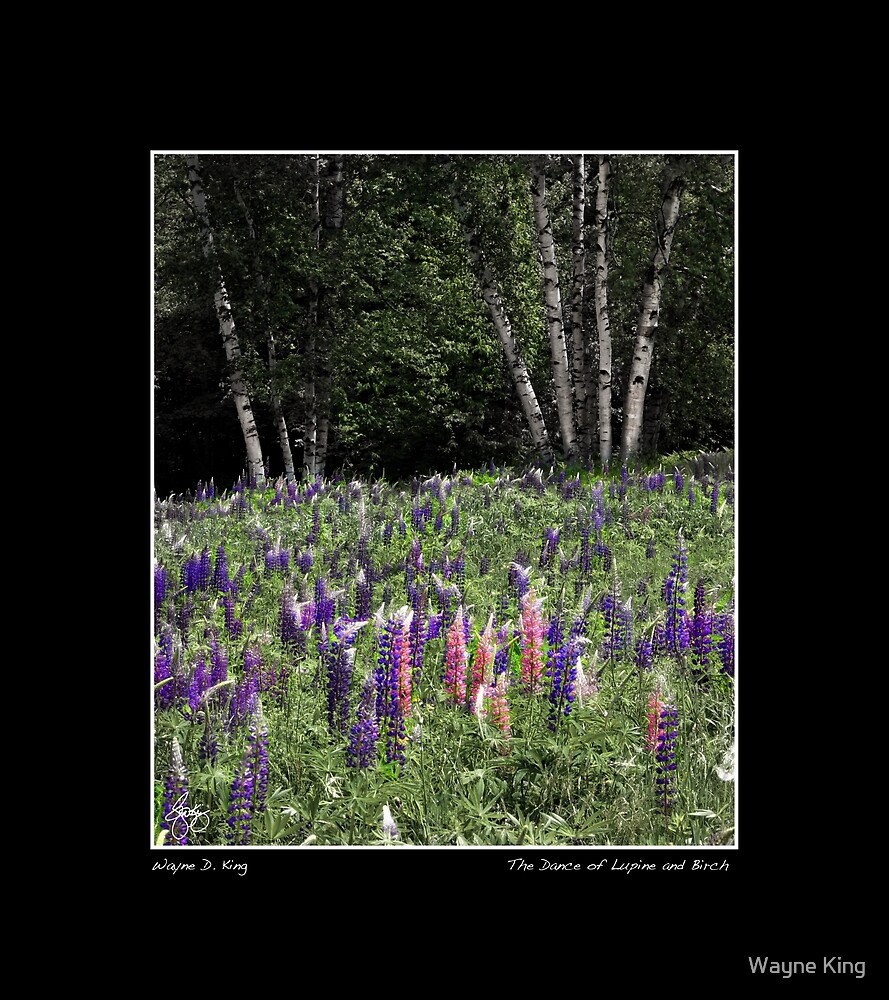
Dance of Lupine and Birch Poster

Sunday, November 9, 2008

Franconia Notch and the Women Who Saved It.

By KIMBERLY A. JARVIS

A case study of early-twentieth-century grassroots preservation and the role of women in the American conservation movement

The "heart of New Hampshire," the 6,000-acre Franconia Notch nestled deep in the majestic White Mountains, was a well-loved summer resort and tourist destination in the nineteenth and early twentieth centuries. When in 1923 a devastating fire destroyed a famous grand hotel-the Profile House-and its owners decided against rebuilding, lumber companies eagerly moved in to evaluate the timber in the region. A vigorous campaign to save the pristine Franconia Notch wilderness rapidly galvanized around the efforts of the Society for the Protection of New Hampshire Forests, the Granite State's premier force dedicated to conservation. Support poured in from local, state, regional, and national sources as the Franconia Notch campaign gathered steam in a bid to acquire and preserve the Notch. The New Hampshire Federation of Women's Clubs was a particularly spirited participant-and a key to the campaign's success. In 1928 the effort culminated in the creation of Franconia Notch Forest Reservation and War Memorial, today's magnificent Franconia Notch State Park. Franconia Notch and the Women Who Saved It is the story of this remarkable grassroots movement. Author Kimberly A. Jarvis applies meticulous scholarly skills to new archival material from the New Hampshire Federation of Women's Clubs and weaves her findings into the dynamic conversations now being carried on among environmental historians and scholars of New England regional culture. Her unique focus on the impulses that inspired early-twentieth-century women's clubs to become involved with this particular regional conservation campaign-and with conservation efforts and nature study generally-is a significant contribution to White Mountain literature and women's studies. Scholars, students, and readers who love nature and history will find much to admire and absorb in Franconia Notch and the Women Who Saved It.

"Franconia Notch and the Women Who Saved It is a masterful study of the origins of American landscape sensibilities and the changing meanings of the White Mountains. Using the campaign to save Franconia Notch as a focal point, Jarvis systematically traces the formation of a conservation ethic in this eastern context and identifies a new cast of characters in the conservation story."-Richard Judd, Professor of History, University of Maine

A wild, rugged, forested Franconia Notch is an important symbol for New Hampshire, but it was almost stripped of much of its natural beauty early in the Twentieth Century. In this engaging and thoroughly researched book, Kim Jarvis tells us how and why people from all walks of life worked together to preserve one of the most scenic spots in the eastern United States."-Kurk Dorsey, Associate Professor of History, University of New Hampshire

"Indispensable reading for anyone interested in the rise of New England conservation, or more broadly, the national attempt to save America's threatened wilderness landscapes in the early twentieth century."-Michael Lewis, Salisbury University

University Press of New England
Paper $25.95
232 Pages 6”x9”
Www.upne.com
KIMBERLY A. JARVIS is Assistant Professor of History at Doane College in Crete, Nebraska. She specializes in the study of women and the conservation movement in the United States and is the author of journal articles and conference papers

White Devil - Robert Rogers and Roger's Rangers

Few New Hampshire citizen’s played a more unique and controversial role in the pre-revolutionary period of America than Robert Rogers.

Robert Rogers, or Rodgers (7 November 1731 – 18 May 1795), was a New Hampshire resident and colonial frontiersman. Born in November of 1781 in Methuen, Mass, his family soon moved north to what is now New Hampshire settling in a town Roger's refers to in his writing as Mountalona and today encompassing what is likely portions of the towns of Dunbarton and Bow.
His service to the people of New England, particularly in the war known in the colonies as the French & Indian War, (in Europe the Seven Years War) is well documented and a study in the waxing and waning fame and controversy that surrounded this remarkable man.

Many military historians attribute the seeds of the American Revolution to the ideology, tactics and strategies of the famed Roger's Rangers, started under his leadership. Indeed, one of his favored rangers was John Stark who would later set aside his "Ranger temperament" to become a General in the Colonial Army and utter the famed phrase "Live Free or Die".


White Devil is a book that provides a balanced and thoughtful look at this fascinating historic figure from the perspective of the lead-up to, and aftermath of, the historically significant and savage, bloody attack on the village of Saint Francis, Quebec.

With British tempers stoked by the 1757 French-led, Indian massacre at Fort William Henry, calls for retribution reached a fevered pitch throughout the colonies. The task of exacting that retribution fell to the Rangers. In what was unquestionably one “war crime” in response to another Rogers was ordered to exact revenge by leading a hazardous search and destroy mission against the Abenaki Indian village of St Francis, far behind enemy lines in Canada’s St. Lawrence Valley.

Against all odds, Rogers and his men fulfilled their perilous orders, only to be faced with the even more daunting prospect of a grueling retreat. Between them and safety lay some 200 miles of unforgiving wilderness. It was a nightmarish journey home. Vengeful French and Indians were soon in hot pursuit. The rangers who evaded them faced other unforgiving enemies. Winter was closing in, and their rations were soon gone: crazed with hunger, some resorted to cannibalism in a desperate bid for survival; those who finally reached safety were truly the walking dead.

St. Francis expedition won Major Rogers’ heroic status throughout Britain’s empire and the moniker “White Devil” among the Abenaki. Today, competing historical views of the events surrounding the attack on St. Francis depict Rogers and his Rangers in much the same dichotomous view.

Without romance, and with a revealing understanding of the emblematic nature of the St. Francis massacre, author Stephan Brumwell draws upon meticulous archival research and first-hand knowledge of the rugged region where these dramatic events unfolded to create a gripping account of the events. Brumwell weaves together the testimonies of eyewitnesses—British, French and Indian—to tell a powerful and moving true story from North America’s violent colonial frontier.
,
Stephan Brumwell is based in Amsterdam. A former newspaper reporter, he received his Ph.D. at the University of Leeds. Brumwell is the author of an acclaimed book about ordinary soldiers who fought the French and Indian War called Redcoats: The British Soldier and War in the Americas, 1755-1763, as well as many journal and magazine articles. A recipient of the Authors’ Foundation Elizabeth Longford Grant, he lectures regularly in the US and the UK.

White Devil – by Stephan Brumwell, Da Capo Press Eleven Cambridge Center, Cambridge MA 02142. Paperback · $17.95 · ISBN: 0-306-81473-0 · 335 pages

Men of Granite

This paperback, non-fiction title contains the true stories of forty-nine of New Hampshire’s fighting men from the year’s 1755 to 1991. Bill McGee has profiled soldiers, sailors, marines, and airmen who made significant contributions in service to their country from the French and Indian War to Iraq.

There are Medal of Honor recipients, an astronaut, and men who were the namesakes of Army forts, an Air Force base, Army airfields, and Navy destroyers. Discover the admirals, generals, privates, and corporals—submariners, parachutists, and fighter pilots from New Hampshire . . . Granite Staters . . . Men of Granite.

About the Author:
William “Bill” McGee was raised in Milford, New Hampshire and graduated Milford High School in
1955, and the University of New Hampshire in 1959. He served in the New Hampshire National Guard
as an Artilleryman, was a 2nd Lt. in the U.S. Army; and an Army Aviator, rated in both helicopters and
fixed-wing aircraft. He served five years active duty. During his 12 months in Vietnam, he was promoted
to Captain and flew over 400 combat missions, rescuing wounded American and Vietnamese soldiers.
McGee is an Eagle Scout and a Silver Beaver. During his forty-five years in Boy Scouting, he has
been a Cub den leader, Scoutmaster, and Woodbadge trainer. He has served on the boards of the Lee
Scouting Museum in Manchester, NH, and the Hillcourt Scout Museum near Syracuse, New York. As a
free-lance writer, he has had his stories and articles published in England, Poland, and in the United
States. He makes his home in Liverpool, New York.

Peter E. Randall Publisher LLC
Visit the website and view animated book trailer!
Blueline Publicity
http://www.menofgranite.com
media@perpublisher.comThis e-mail address is being protected from spam bots, you need JavaScript enabled to view it
603-431-5667 / 603-205-0552

Publication date: April 15, 2008
Distributor: Enfield Distribution — ISBN13# 978-1-931807-65-4
$19.95, 264 pgs, trade paper, 6”x9”, History

Wednesday, November 5, 2008

New Hampshire Then and Now


Historical and Contemporary Photographs of the Granite State from 1840 to 2005 (Hardcover)

New Hampshire native, and award-winning photographer, Peter E. Randall captured changes in cityscapes and landscapes. The 80 sets of images presented provide an important historical record contrasted with a contemporary artistic vision of New Hampshire and its people. Using the archives of the New Hampshire Historical Society, local historical organizations, and individuals, Randall selected the vintage photographs and recreated their contemporary equivalents. Also an historian, Randall included historical data for each photograph. It's a perfect keepsake title for anyone who loves New Hampshire.

About the Author


native of the New Hampshire seacoast, Peter E. Randall is the twelfth generation of his family to live in the region. he has been involved with publishing since graduating from the University of New Hampshire as a history major. Before he began his own publishing company, he was editor of a weekly newspaper, and for seven yeras edited New Hampshire Profiles Magazine. Since 1974, he has authored 14 books ranging from collections of photographs and travel guides, to local history. His latest book is New Hampshire: Then and Now, published in April 2006. 

View a sample of pages from New Hampshire Then & Now. (PDF - Please be patient as this may take a few moments to download.)

Hardcover: 176 pages

Publisher: Peter E Randall Publisher (August 15, 2006)

Language: English

ISBN-10: 1931807477

ISBN-13: 978-1931807470

Product Dimensions: 12.4 x 9.2 x 0.7 inches

Monday, November 3, 2008

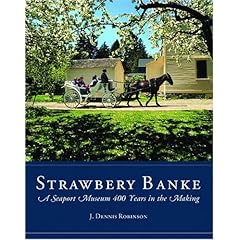
Strawbery Banke: A Seaport Museum 400 Years in the Making

NH Books


Strawbery Banke Museum is a rich core sample of an ever-changing

America. The ten-acre museum campus, New Hampshire’s earliest

neighborhood, began as a British plantation on a tidal inlet. Abandoned by its

founders in 1635, the settlement “accidentally” named Strawberry Bank

survived to become New Hampshire’s only seaport. A century later the

bustling Portsmouth waterfront was home to royal governors, tall ships,

skilled artisans, and wealthy merchants. When the maritime economy crashed

and the city burned in the nineteenth century, the “Puddle Dock”

neighborhood drew waves of immigrant families to its ancient low-rent

buildings. Then in the twentieth century, fearful of urban “blight,” a federal redevelopment project went

off here like a neutron bomb. The population and the junkyards disappeared, but a grassroots

preservation movement saved many historic buildings from the bulldozers of progress.

Rich with pictures and painstakingly researched, this work is actually two books in one. 􀀁The first

tracks 400 years of history along the Piscataqua River with dramatic tales that will surprise even New

Hampshire natives. The story then goes behind the scenes to the controversial founding of Strawbery

Banke Museum in 1958. Tapping into private letters, unpublished records and personal interviews, the

author explores the politics of preservation in a small blue-collar city. Always lively, this highly

readable history tracks modern Portsmouth from a gritty working seaport to a cultural heritage

destination, assessing what is gained and what is lost along the way.


About the author:

J. Dennis Robinson is editor and owner of the popular regional Web site SeacoastNH.com. An

award-winning author of over ten titles, educator, audio and video producer, lecturer, and columnist,

Robinson has published over a thousand articles on local history and culture. His most recent books

include juvenile biographies of outlaw Jesse James and Maryland founder Lord Baltimore, and

Wentworth by the Sea: The Life and Times of a Grand Hotel. He recently received a commendation for

Best History Writer (2007) from NH Magazine, among other awards. He lives in Portsmouth, New

Hampshire, with his wife Maryellen Burke.


About the photographers Ralph Morang, Richard Haynes Jr., Douglas Armsden:

Richard Haynes Jr. earned a Master of Fine Arts from Pratt Institute in New York. Born in the South,

he is currently a noted New Hampshire painter, educator, and activist.

Ralph Morang grew up in Rye, and his family has been involved with Strawbery Banke since the

1960s. He has been a freelance -photographer and photojournalist in the -seacoast for thirty years.

Douglas Armsden photographed Strawbery Banke in its founding years. Born in 1920, he lives in

Kittery Point, Maine.